
IIThe moment before descent
2026
Polyurethane rubber
82 × 48.5 × 3 cm
The Great Filter

Plate I
2026
Engraved wood, resin and wood
82 × 54 × 4 cm
Chapter I
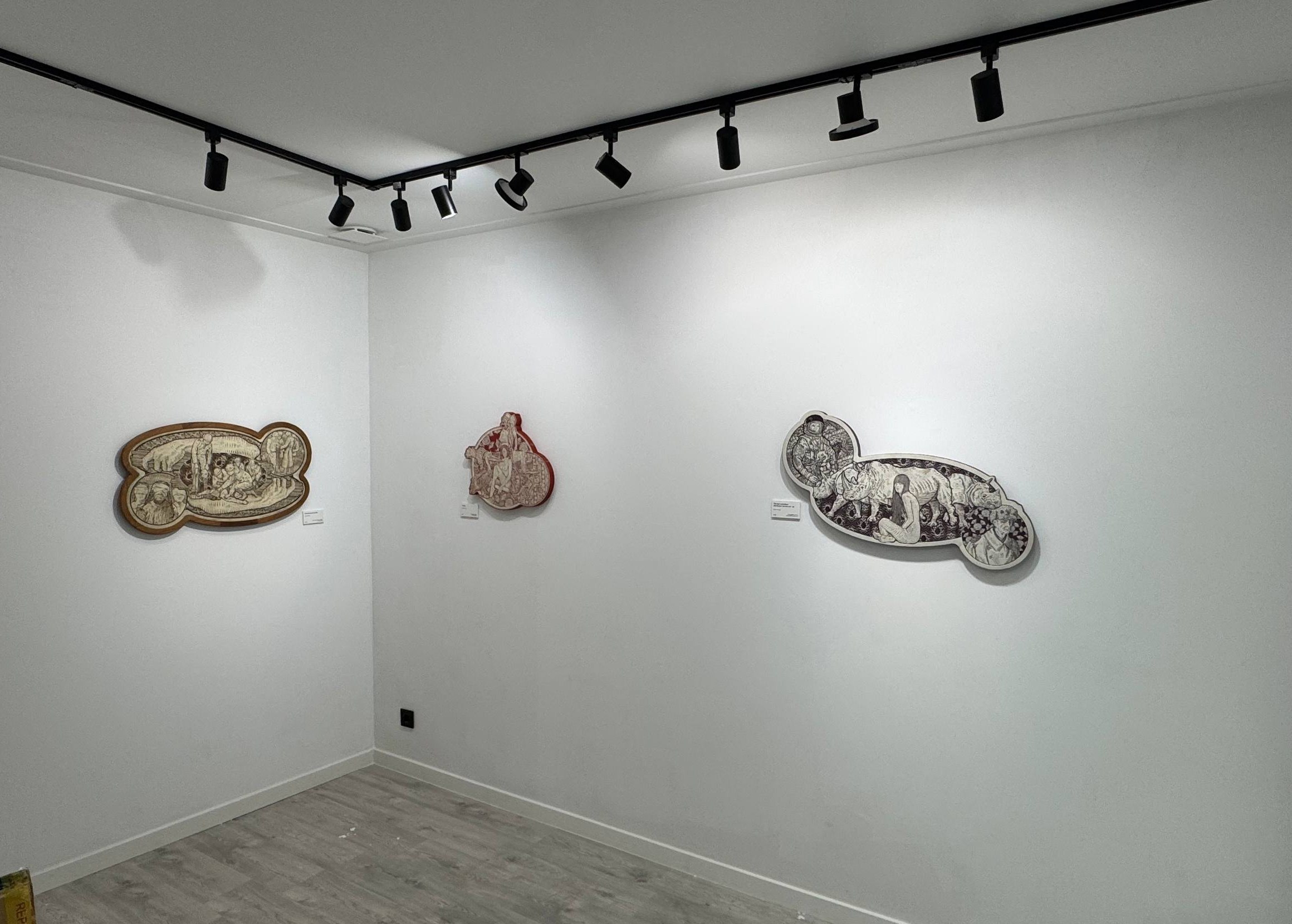
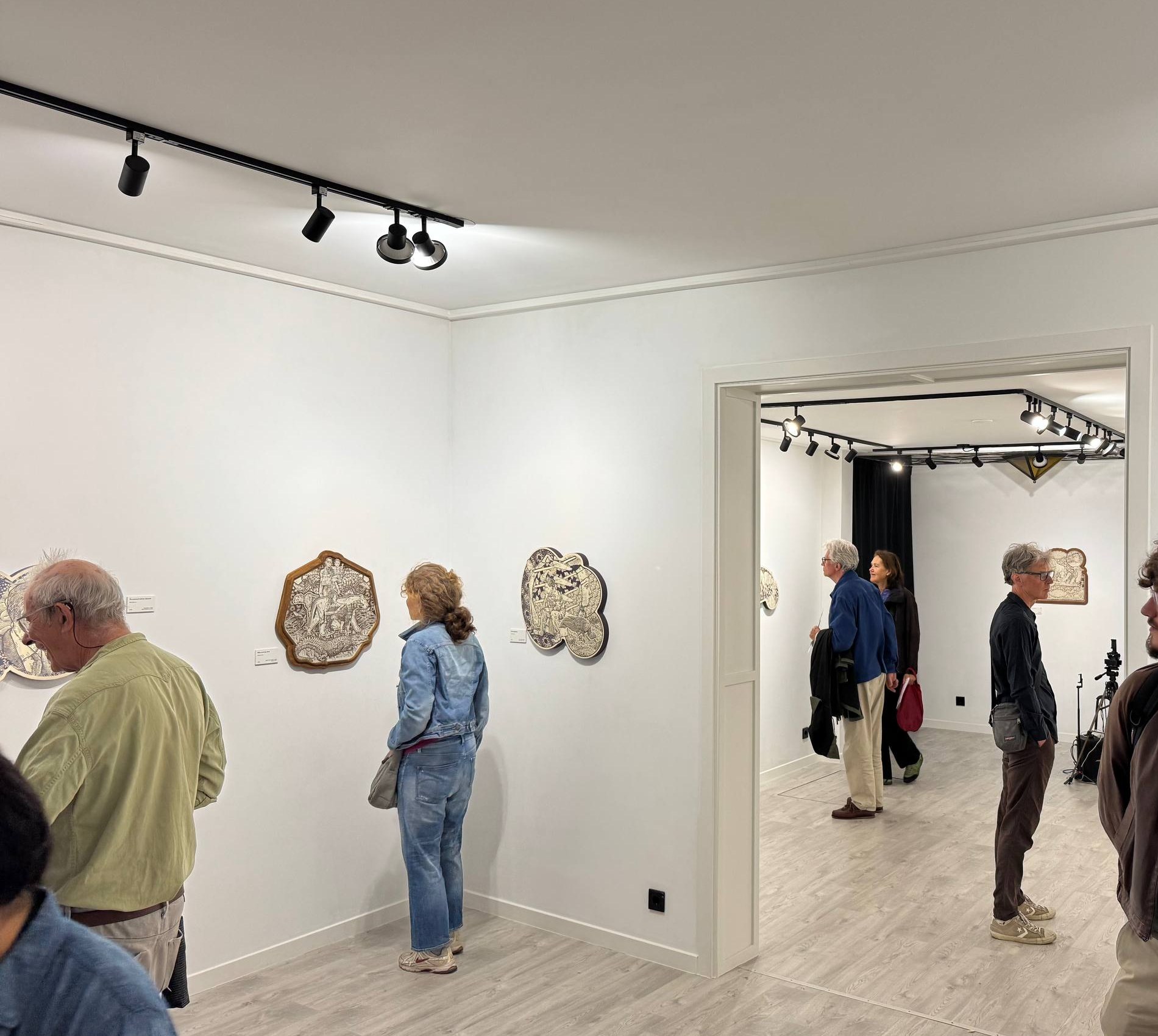
Seven works from The Great Filter, 2026.
2026
Polyurethane rubber
82 × 48.5 × 3 cm

2026
Engraved wood, resin and wood
54 × 53 cm

2026
Polyurethane rubber
56 × 48 × 3 cm

2026
Polyurethane rubber
72 × 48 × 3 cm

2026
Polyurethane rubber
48.5 × 62 × 3 cm

2026
Polyurethane rubber
80 × 48.5 × 3 cm
Chapter II
9–29 May 2026
NGO DEI, The Hague
The Great Filter considers humanity’s position at a moment of accelerating technological power, ecological instability and renewed global conflict.
Children, animals and machines occupy fragile visual systems structured through rhythm, symmetry and repetition. The works ask whether intelligence is enough to survive the forces it has created.
“I’m interested in the possibility that humanity may be approaching that moment—and what that means for the fragile systems that sustain life.”
A note on the artist
Peter Mammes is a South African-born artist based in London. Rooted in intricate brush-and-ink drawing, his practice extends into relief, sculpture and fabricated objects.
Mammes thinks of the studio as a laboratory: a place where images can be tested until they begin to do something that feels like magic. He is drawn to the symbolic force of ancient Egyptian art—its belief that an image could hold power—and to the awe and terror of the universe beyond human scale. Ideas often arrive while he lies awake at night, long before he knows how to make them. New tools and processes eventually gave him the means to turn those persistent images into physical objects.
Research for Mammes is often a form of travel. He has established temporary studios in India, Russia and Cairo, and travelled through South America, including Peru and the Amazon rainforest. These journeys brought him into contact with places where images, architecture and landscape seem charged with forces larger than the individual. The density and strangeness of the rainforest—with life multiplying at every scale—deepened his sense that the natural world contains forms of order that remain mysterious to us. He carries that encounter back into the studio, searching for images capable of producing their own symbolic power and awe.
Becoming a father radically altered the direction from which Mammes views the future. Questions of ecological damage, conflict and technological power ceased to be distant historical cycles and became matters his child may inherit. The work does not offer reassurance, but it now holds a more urgent concern with what remains alive, what is passed on, and whether humanity can become responsible for the forces it has created.
CV / Press